


Croatian kuna exchange rate
WE SELL RATE HISTORY OF CROATIAN KUNA
WE BUY RATE HISTORY OF CROATIAN KUNA
CROATIAN KUNE INFO
The Croatian Kuna.
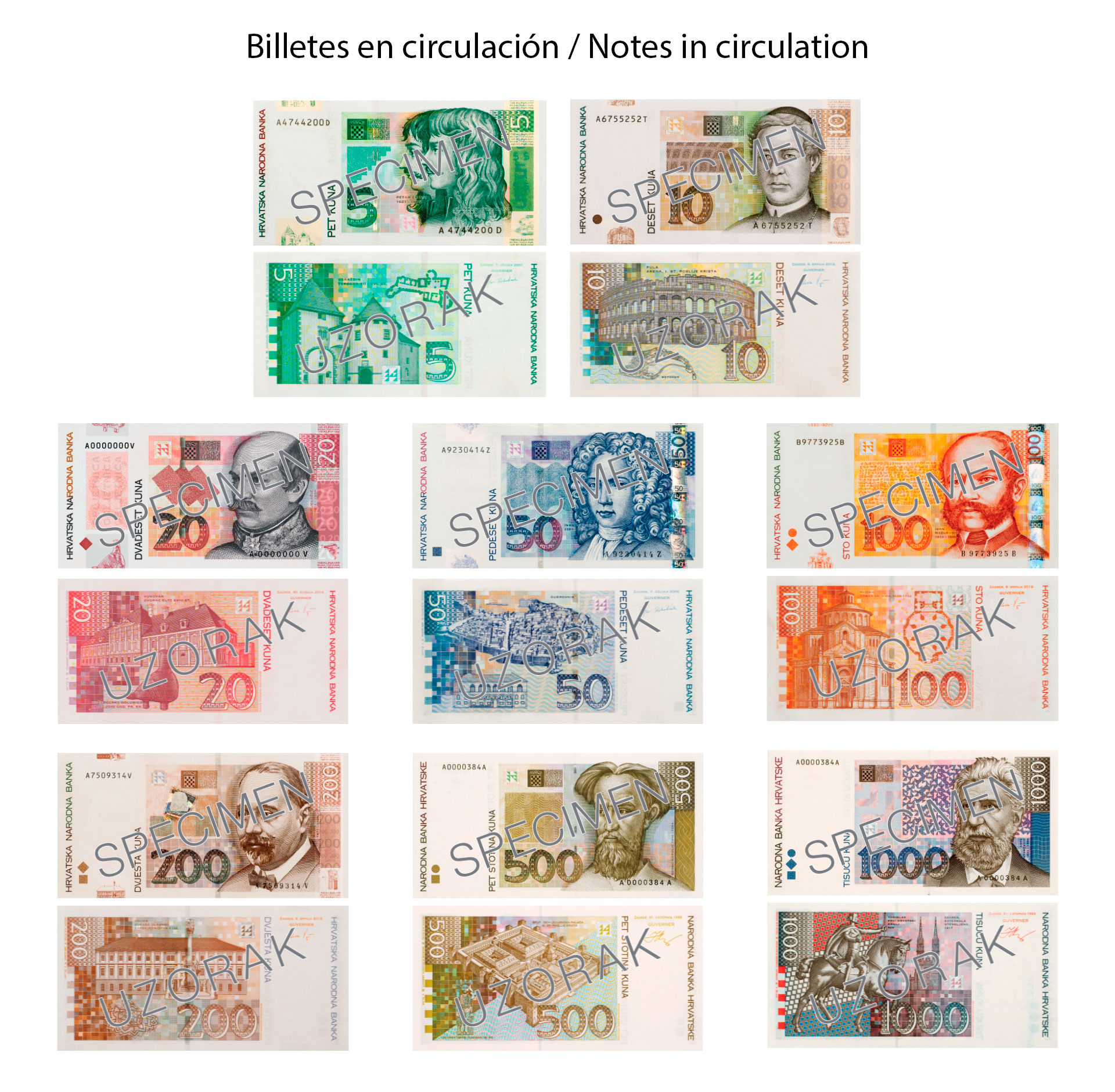
Notes: 5, 10, 20, 50, 100, 200, 500, 1000 kuna
Coins: 1, 2, 5, 10, 20, 50 lipa and 1, 2, 5, 25 kuna
Subunit: lipa
Code: HRK
Symbol: kn
Main Exchanges
Among the most notable tourist cities in Croatia are Dubrovnik, known as the "Pearl of the Adriatic" for its stunning walled Old Town; Zagreb, the capital, with its vibrant cultural scene and Austro-Hungarian architecture; and Split, home to the famous Diocletian's Palace. Other highlights include Zadar, with its beautiful waterfront and famous Sea Organ, and Rovinj, a picturesque coastal town with Venetian influences.
Croatia: History, Culture, and Landscapes
Croatia, located in southeastern Europe, is a destination rich in history, natural beauty, and vibrant culture. Its Adriatic coastline, with paradise-like islands and crystal-clear waters, makes it an ideal place for tourism. Additionally, its rich history is reflected in its medieval cities, castles, and historical monuments.
Dubrovnik is one of the most visited cities in Croatia, with its impressive walls and cobblestone streets that transport visitors to the past. The Istria region is famous for its cuisine and Italian influences, while the Plitvice Lakes, with their waterfalls and turquoise waters, are a must-see destination for nature lovers.
About the Croatian Kuna and the History of the Currency
Before adopting the euro in 2023, the official currency of Croatia was the Croatian kuna. Its symbol was HRK, and it was divided into 100 lipas. Introduced in 1994 after gaining independence from Yugoslavia, the kuna was used as the national currency for nearly three decades.
The Croatian National Bank was responsible for issuing and regulating the Croatian kuna until its transition to the euro. This change marked a milestone in Croatia’s integration into the European Union and strengthened its economy within the European framework.
Banknotes and Coins of the Croatian Kuna
Before the euro, Croatian kuna banknotes were issued in denominations of 10, 20, 50, 100, 200, 500, and 1,000 kunas. They featured images of historical Croatian figures and iconic national landmarks.
The circulating coins included values of 1, 2, 5, 10, 20, and 50 lipas, as well as 1, 2, and 5 kunas. Their designs reflected Croatia’s rich cultural heritage, featuring national symbols, wildlife, and historical elements.
On the 5 Kuna note appear on the front Petar Zrinski and Fran Krsto Frankopan (both members of two powerful families of nobles and involved in the Conjuration of the Magnates that sought to end the absolutism of the Hasburg) and on the reverse appear the plane and facade of the Varaždin Castle.
On the obverse of the 10 Kuna note appears Juraj Dobrila (Bishop of Istria who influenced major political and social changes in Croatia fighting for equality and rights) and on the reverse appears the amphitheater of Pula and a map of the town of Motovun.
In the 20 Kuna one appears on the obverse Josip Jelačić (prominent army general who proclaimed the independence of Croatia from the Hungarian government and was a strong protector of Croatian rights) and on the back appears the Castle of Count Eltz in Vukovar.
On the 50 Kunas note appears on the obverse Ivan Gundulić (renowned baroque poet who embodied in one of his most famous works his utopian Renaissance influences of the ideal state) and on the back the Old City of Dubrovnik and the Rector's Palace.
On the front of the 100 Kuna note appears Ivan Mažuranić (poet, linguist, lawyer and politician who promoted changes in political, judicial and educational administration as well as the foundation of the University of Zagreb) and on the reverse side the facade and the map of the Church of San Vid in Rijeka.
In the 200 Kunas one there is Stjepan Radić (founder of the Croatian Peasant Peoples Party in 1904 with a very prominent political career) on the obverse and, on the reverse side, Osijek's headquarters, the Monument to the Holy Trinity and a map of the old fortress.
Marko Marulić (Croatian poet, representative of European Christian humanism and Renaissance epic) appears on the front of the 500’ note on the obverse, and on the back is the Diocletian's Palace in Split and the figure of a Croatian governor who is in the baptismal font inside the Palace.
In the one of 1,000 it appears in the obverse Kunas Ante Starčević (politician and publicist that established the bases of the modern and independent Croatian state and is considered, for that reason, one of the fathers of the nation) and in the reverse the Monument to the first Croatian King (Tomislav) located in Zagreb and the front facade of the Zagreb Cathedral.
CROATIAN KUNA BANKNOTES
The Transition to the Euro in Croatia
Since January 1, 2023, Croatia has adopted the euro as its official currency, replacing the kuna. This transition facilitates trade and travel within the eurozone, offering greater economic stability and eliminating the need for currency exchange within the European Union. However, kuna banknotes and coins remained in circulation for a transition period before being fully withdrawn.
Tips to travel to Croatia
If you already don't know whis is the best time to travel to Croatia, on our blog we tell you the reasons to visit the country during the summer.
Look for the closest office with this currency