


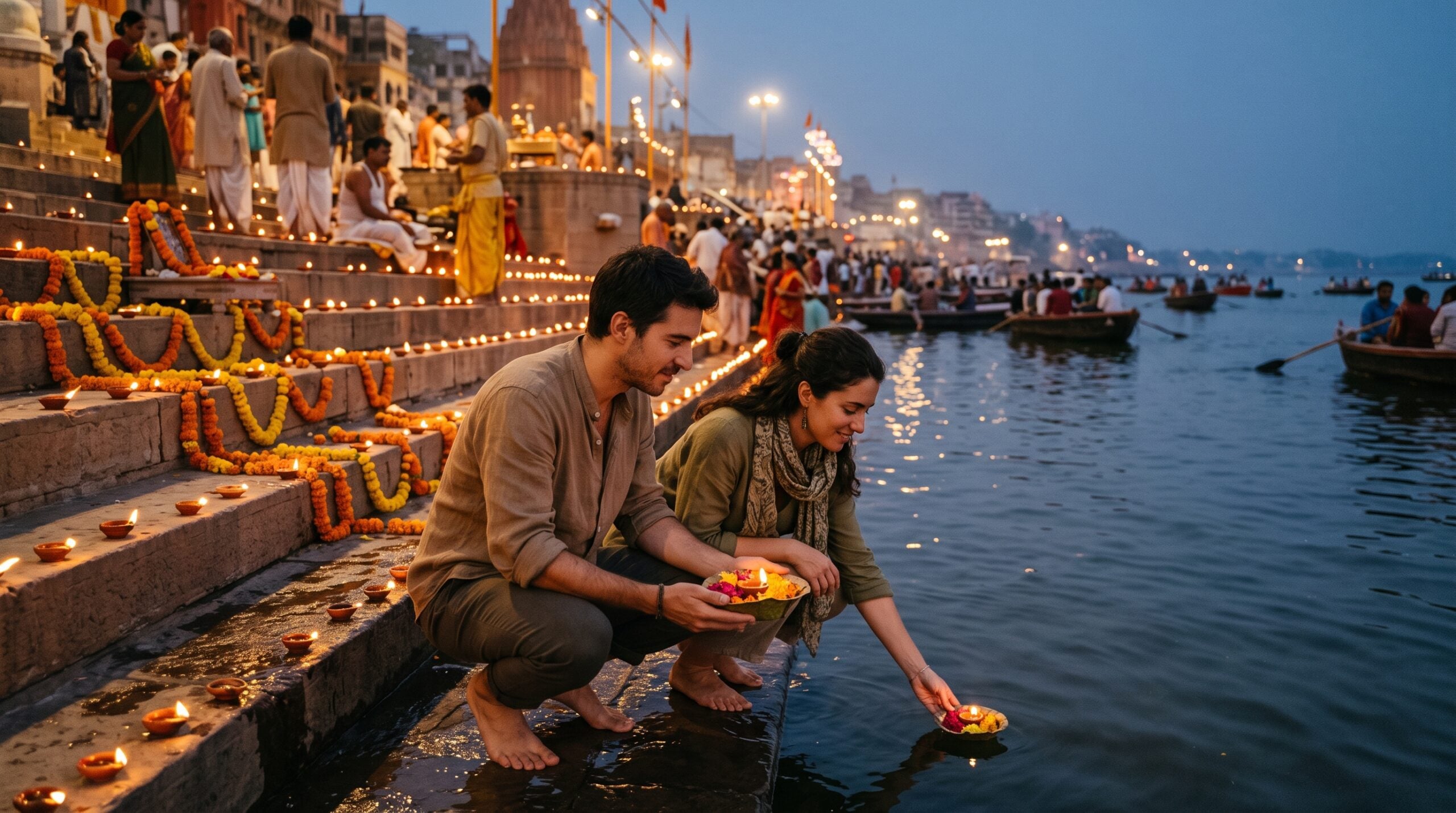
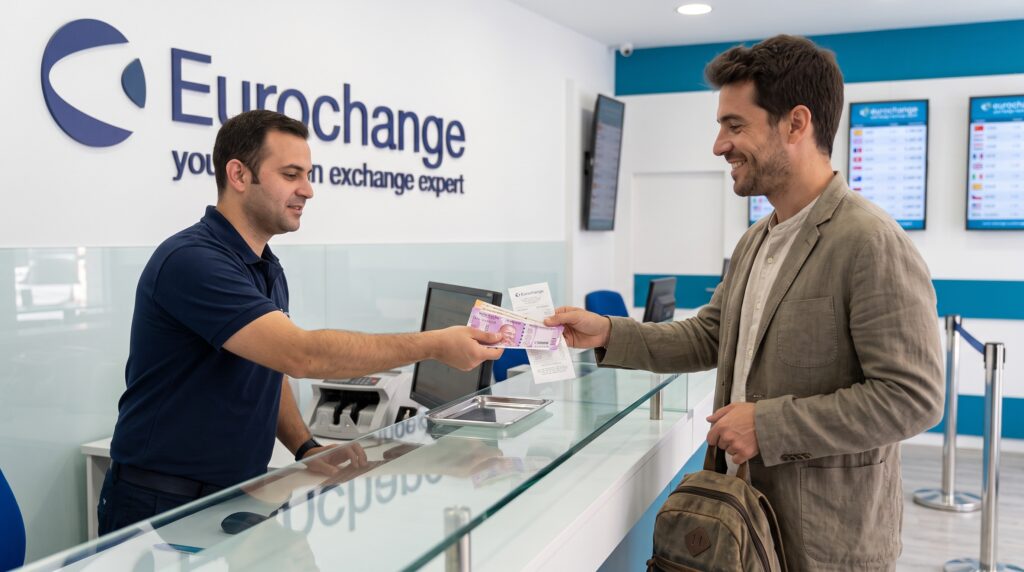
If you are planning a trip to India from Spain for the Diwali celebrations (November 1, 2026) or the dry season through to March, the official currency you will need is the Indian rupee (ISO code: INR, symbol: ₹). While mobile QR payments are widespread among locals, they typically require a domestic bank account and Indian phone number. Carrying cash in New Mahatma Gandhi Series banknotes and arranging your currency exchange before leaving Spain with Eurochange —online with home delivery or at one of our 40+ branches— saves you from airport queues and ensures you can pay for your first auto-rickshaw or temple offering right away.
November to March: Why the Post-Monsoon Season and Diwali Are Ideal for Your Trip
Once the monsoon retreats in October, northern and central India enjoy mild daytime temperatures, low humidity, and clear skies from November to March. Early November also marks our “Mystic India” campaign and Diwali (the Festival of Lights on November 1, 2026), when streets and riverside steps glow with thousands of clay oil lamps (diyas) and marigold rangolis.
Key practical considerations by region:
Rishikesh (Uttarakhand): Traditional ashrams and yoga retreats often request cash donations (dakshina), and local shops prefer small notes.
Varanasi: Attending the evening Ganga Aarti, hiring a dawn rowing boat, or buying floating candle offerings requires cash in hand.
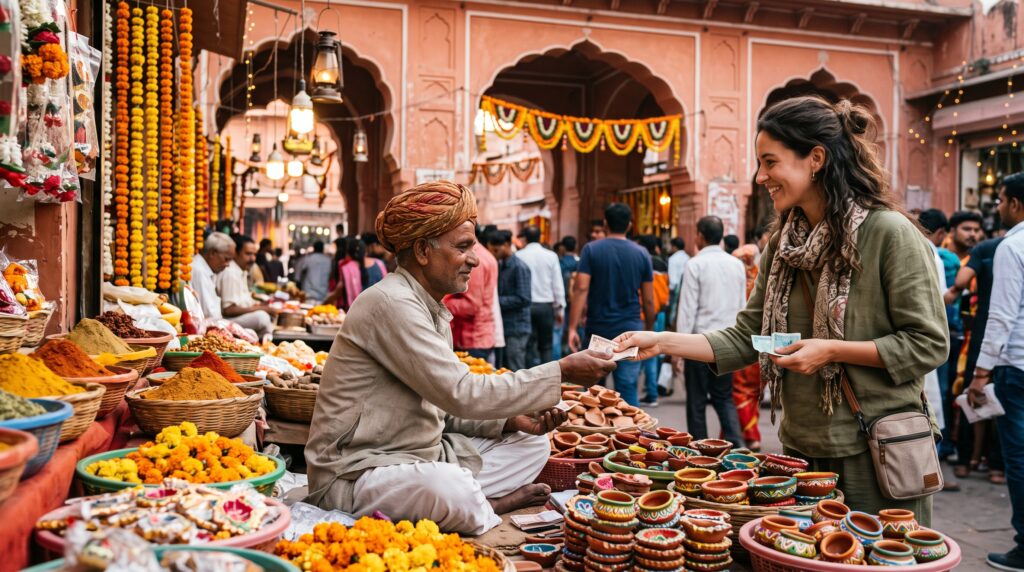
Jaipur and Udaipur (Rajasthan): Busy historic markets like Johari Bazaar run on cash and polite bargaining, where small denominations are essential.
Entry requirements from Spain: Passport valid for at least six months from arrival with two blank pages, a pre-approved official e-Tourist Visa, return ticket, and travel medical insurance.
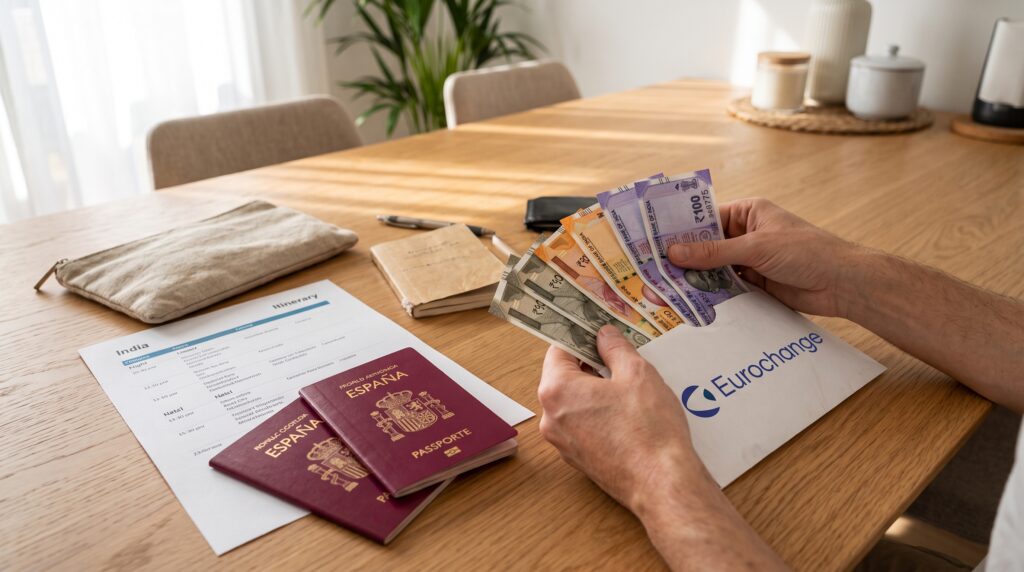

Money and Payments in India: How the Indian Rupee (INR) Works on the Ground
The official currency is the Indian rupee (INR, ₹), subdivided into 100 paise (rarely used). Coins circulate in 1, 2, 5, and 10 rupees, while valid banknotes belong to the New Mahatma Gandhi Series in denominations of 10, 50, 100, 200, and 500 rupees (Eurochange exclusively supplies valid notes from this series). In local terms, 1 lakh equals 100,000 INR and 1 crore equals 10,000,000 INR.
Cards, Mobile QR Codes, or Cash?
India’s local UPI QR system is generally inaccessible to short-stay foreign tourists without local banking verification:
Where cards work: Mid-to-high-end hotels, domestic airlines, official railway bookings, and upscale restaurants accept Visa and Mastercard. Exchange rates and foreign transaction fees depend on your issuing bank.
Where cash is essential:
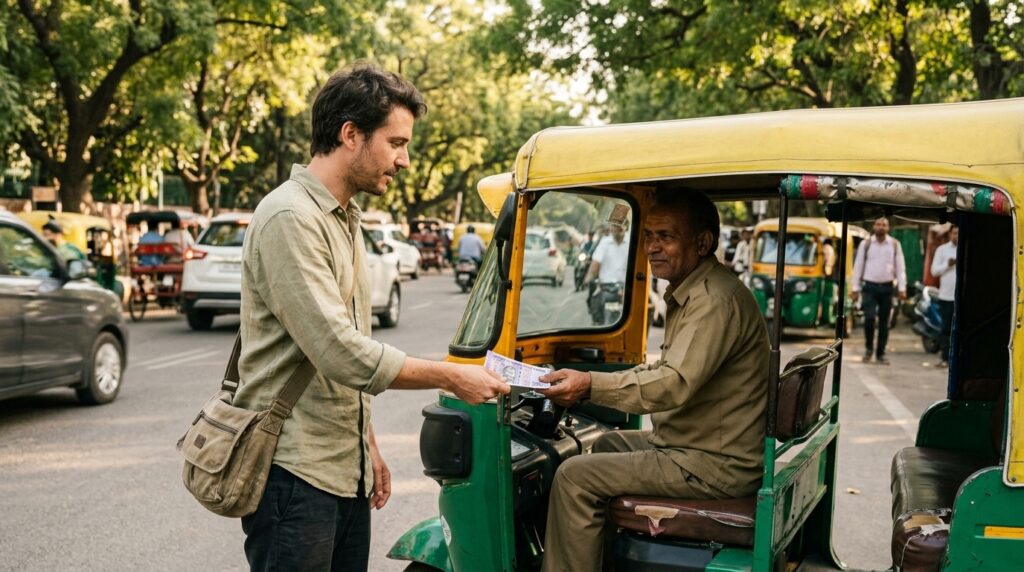
Local transport: Auto-rickshaws (tuk-tuks) and street taxis. Drivers rarely have change for a 500 INR note on short fares.
Temples and ashrams: Shoe-minding counters (10–20 INR), offerings (prasad), and donations.
Street food and bazaars: Masala chai stalls, snacks, and local crafts.
Tipping (baksheesh): Customary for porters, private drivers, and local guides.
Important: Shopkeepers and drivers routinely refuse torn, taped, or pen-marked banknotes. Always inspect your change.
How Much Cash Should You Carry to India?
Your cash budget depends on trip length, accommodation style, and pre-booked services. Keep Reserve Bank of India (RBI) customs rules in mind regarding currency limits, and declare foreign currency exceeding USD 5,000 in cash (or USD 10,000 total) upon arrival.
Indicative daily expenses:
Sealed bottled water and tea stops: 100–250 INR/day.
Short urban auto-rickshaw rides: 100–300 INR.
Meal at a mid-range local restaurant: 800–1,500 INR per person.
Monument tickets (e.g., Taj Mahal, Amber Fort): 500–1,300 INR.
ATMs during festivals: During Diwali, ATMs frequently run out of cash due to local demand, cap single withdrawals (often at 10,000 INR), and may apply operator and home-bank withdrawal fees.
Why Exchanging Currency Before You Fly Makes Sense
Immediate readiness on arrival: Pay for prepaid airport taxis, water, or tips without queuing at midnight.
Upfront budget control in euros: Know exactly how much your daily spending money costs before departure.
Protection during holiday closures: Banks close around November 1st for Diwali and ATM refills slow down.
Eurochange: Convenient Currency Exchange in Spain Before Your Trip
At Eurochange, you can arrange your travel money in Spain through two channels:
Online money exchange with home delivery: Order via our website and receive your banknotes within 24–72 working hours across mainland Spain.
Over 40 physical branches in Spain: In-person service supplying valid New Mahatma Gandhi Series banknotes (10, 50, 100, 200, and 500 INR).
Keep Small Banknotes Separate
Spend 500 INR notes at larger hotels or supermarkets, and save 10, 50, 100, and 200 INR notes in an accessible pocket for tuk-tuks and street stalls.
Split Your Cash Safely
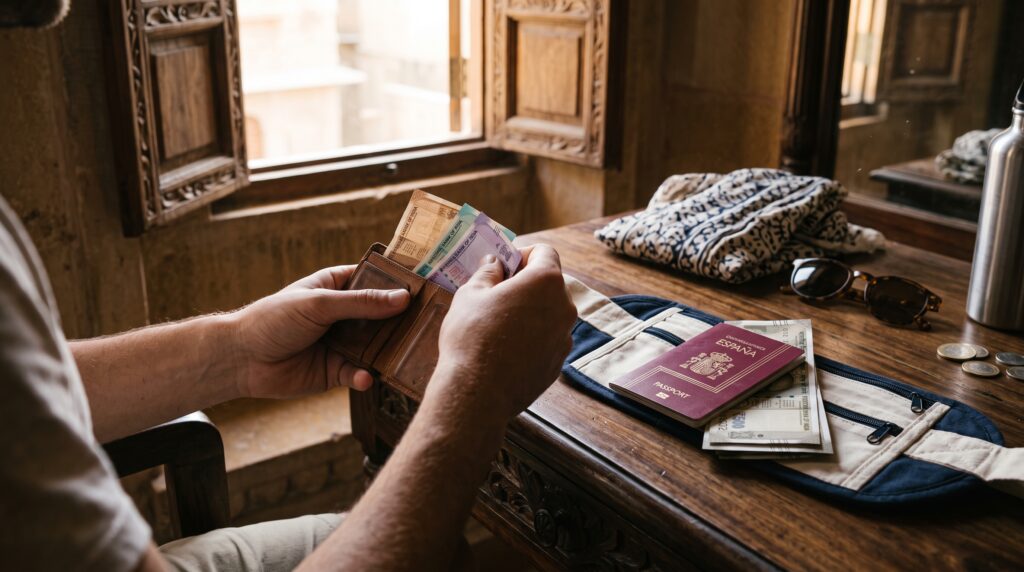
On overnight trains or in busy markets, store your main cash reserve and original passport in a concealed money belt, keeping only daily spending cash (1,500–3,000 INR) and a printed copy of your passport and e-Visa in your day bag.
Enable International Card Use Before Departure
Activate non-EU usage in your banking app before flying to prevent automated fraud blocks.
What to Do With Leftover Indian Rupees
Use loose coins on your final days, and exchange any undamaged New Mahatma Gandhi Series banknotes back into euros at any Eurochange branch upon your return.
What currency is used in India?
The official currency is the Indian rupee (ISO code: INR, symbol: ₹). Valid banknotes belong to the New Mahatma Gandhi Series (10, 50, 100, 200, and 500 INR), alongside 1, 2, 5, and 10 rupee coins.
Can you pay with euros in India?
No, euros are not accepted in shops, temples, or transport. You must use Indian rupees (INR) for all cash transactions.
Is it better to take cash or a card to India?
Combine both, prioritizing cash for daily expenses. Cards work in upscale hotels and online bookings, but cash in INR is essential for rickshaws, bazaars, tips, and temples since foreign visitors generally cannot use local UPI QR payments.
Which Indian rupee banknotes are valid?
Only clean, untorn banknotes from the New Mahatma Gandhi Series (10, 50, 100, 200, and 500 INR) without pen markings. Eurochange exclusively supplies valid notes from this series.
Where can I exchange euros to Indian rupees in Spain before travelling?
You can exchange euros for Indian rupees with Eurochange, either online with 24–72 hour home delivery or at any of our 40+ branches across Spain.
| Destination | Currency | ISO Code | Cash Usage | Practical Tip |
|---|---|---|---|---|
| India (Rishikesh, Varanasi, Jaipur, Delhi) |
Indian Rupee (₹) | INR | Very high for local transport (rickshaws), bazaars, temples, ashrams, and tipping. Medium in international hotels. | Keep small notes (10, 50, 100, and 200 INR) from the New Mahatma Gandhi Series handy, and refuse torn or marked bills. |
Experiencing Diwali and India’s dry season deserves your full attention rather than searching for stocked ATMs during public holidays. Arrange your currency exchange before flying with Eurochange and land in India with your rupees ready from step one.

