

Lunes a Viernes de 09:00 a 17:00 h.
Sábado de 09:00 a 14:00 h.También atenderemos tus consultas a través de nuestras Redes Sociales


Quizá la pregunta que quieres hacernos tiene respuesta rápida, consulta en nuestro buscador de preguntas frecuentes.
Sí. En Eurochange tenemos licencia del Banco de España para vender divisas de otros países. Puedes comprar tus divisas extrtanjeras en la mayoría de nuestras oficinas de cambio de moneda o a través de nuestra web.
Sí. Con nuestro servicio de recompra de moneda extranjera puedes devolver hasta el 30% del dinero que te haya sobrado y te lo devolvemos al mismo precio que pagaste. Recuerda que tu compra debe ser superior a 750€ para poder aprovechar este servicio y la devolución se hará en cualquiera de nuestras oficinas de cambio.
Sí. De acuerdo a la legislación vigente, es obligatorio presentar un documento de identidad original y en vigor (no caducado). Aceptamos DNI o Pasaporte. Recuerda que, si eres socio del Club Eurochange, agilizamos el proceso, pero debes tener tu documentación actualizada en nuestra base de datos.
Tenemos oficinas de cambio Eurochange en los principales poblaciones turísticas de Alicante, Murcia, Almería, Málaga y Mallorca.Encuentra tu oficina de cambio más cercana.
Podrás conocer los horarios y direcciones exactas de cada oficina visitando cada localidad, por ejemplo, ¿quieres saber dónde están las oficinas de cambio de moneda en Benidorm? Pincha aquí.
No. En Eurochange tenemos dos tipos de licencia: una para comprar divisas (cambio de divisa extranjera a Euro) y otra para vender divisas (cambio de Euro a divisa extranjera). En todas las oficinas podemos comprar divisas, es decir, puedes cambiar tus divisas a Euros. Sin embargo, sólo podrás comprar divisas en algunas de ellas. Visita nuestra página sobre la compra y venta de divisas extranjera para saber dónde encontrar el servicio que buscas. También puedes comprar tus divisas a través de nuestra página web o por teléfono.
En Eurochange trabajamos con más de 40 divisas diferentes, las principales divisas a nivel mundial, y ampliamos esta oferta regularmente. Puedes consultar nuestro listado de divisas para ver las que tenemos disponibles actualmente.
Si necesitas comprar o vender una divisa que no aparece en el listado, no dudes en consultarnos y te confirmaremos la disponibilidad.
Puedes acercarte a cualquier oficina Eurochange con los billetes y te confirmaremos si son de curso legal o no. También puedes enviarnos una foto por e-mail o por Whatsapp y te confirmaremos si todavía son válidos. O puedes acceder a la página de cada divisa de nuestra web y comprobar si tus billetes aparecen en las imágenes de los billetes en circulación de cada divisa.
No, en Eurochange sólo trabajamos con billetes extranjeros. No podemos aceptar monedas de otras divisas. Recuérdalo para gastar o cambiar todas las monedas que te queden antes de tu vuelta.
En Eurochange actualizamos diariamente los precios de todas nuestras divisas. Si quieres saber el precio puedes consultarlo en nuestra Tabla de cotización. Si tienes alguna duda puedes llamarnos y te ayudaremos.
No, en Eurochange no aplicamos comisiones. El importe que vas a recibir se calcula directamente aplicando la cotización del día.
Sí, en Eurochange ofrecemos mejores precios que banco y oficinas en aeropuertos. Además no cobramos comisiones. Si no estás seguro/a, puedes realizar la comparación. Nuestros precios son transparentes.
Sí, en todas las oficinas Eurochange encontrarás el mismo tipo de cambio actualizado diariamente (salvo promociones específicas que pueda haber en una oficina determinada). Puedes consultarlo en cualquier oficina o contactando con el Centro de Atención al Cliente.
Sí, tenemos la misma cotización para todas las divisas en nuestra web y en las oficinas.
Selecciona las divisas que quieres y el importe en nuestro calculador de cambios. Puedes hacer la reserva por email en la dirección [email protected], llamándonos al 615 403 877 o enviándonos un WhatsApp al mismo número.
No es obligatorio, pero sí es recomendable que hagas una reserva para asegurar que tendrás el importe que quieras disponible para la fecha escogida. Si quieres consultar la disponibilidad de alguna divisas puedes hacerlo llamando al 615 403 877.
El precio que se aplica al realizar una reserva es el del día de recogida. Si quieres mantener el precio del día puedes escoger la opción de COMPRAR. De esta manera pagarás las divisas en el momento y podrás recogerlas cuando mejor te venga en cualquiera de nuestras oficinas de recogida o escoger el envío a domicilio y te las entregaremos en casa en un plazo de 24-72 horas en función del stock disponible.
En función del stock de divisas que tengamos cada día, podemos atender reservas incluso para el mismo día. Sin embargo, lo más recomendable es que reserves las divisas que necesites con un mínimo de 2 ó 3 días de antelación.
Sí, no existe un plazo máximo para reservas tus divisas. Si te vas de viaje dentro de unas semanas y quieres reservar ya para poder despreocuparte de esta cuestión, no tenemos inconveniente. Pero recuerda que el precio aplicado será el del día de recogida.
Sí. Puedes realizar cambios enviándonos un email a [email protected] o llamando al 615 403 877. En la medida de lo posible, realizaremos los cambios que nos pidas.
Sí. Si te has dado de alta como cliente, puedes acceder a tu área privada y realizar la cancelación. Si has hecho la reserva sin registrarte, puedes cancelarla enviándonos un email a [email protected] o llamando al 615 403 877.
Si vas a viajar a un país en el que tengan una moneda diferente del Euro y necesitas comprar divisas, sólo tienes que escoger la divisa que quieres, el importe que quieres comprar y hacer clic en la opción COMPRAR. Tendrás tus divisas en casa entre las 24h y 72h siguientes (en días laborables).
Utiliza nuestro conversor para escoger la divisa que necesitas y la cantidad. Selecciona la opción COMPRAR y rellena los pasos del proceso de compra. Escoge envío a domicilio o recogida en una de nuestras oficinas con servicio de recogida. Dale a pagar e introduce tu tarjeta. Una vez confirmado acaba de rellenar tu ficha de cliente, elige el dia y hora de entraga y tendrás disponibles las divisas en un plazo de 24-72 horas (en días laborables).
Las modificaciones o anulaciones de pedidos deberán ser comunicadas por teléfono al 615 403 877 durante las horas de atención al cliente y se realizarán en la medida de lo posible siempre que el pedido no se haya procesado. En cualquier caso, ningún pedido podrá ser modificado o anulado una vez que hayamos comenzado a tramitarlo.
De acuerdo a la ley de blanqueo de capitales, las operaciones de cambio de divisa deberán ir identificadas con el DNI del titular o NIE (Comunidad Europea) o Pasaporte si extracomunitaria. Por este motivo solicitamos que nos facilites el documento legible y tener a mano. Sólo será necesario que lo adjuntes la primera vez que realices una compra. Después quedará almacenado en el sistema y sólo habrá que renovarlo en caso de que caduque.
Si quieres realizar cualquier cambio en tus datos personales, dirección de entrega, etc., podrás hacerlo en tu ÁREA PRIVADA a la que accederás con tu número de identificación (DNI, NIE, Pasaporte) y tu contraseña. También puedes hacerlo contactando con nosotros en [email protected] o en el 615 403 877. Para cancelar tu cuenta online, será necesario que contactes con nosotros.
Si quieres recibir las últimas noticias en tu bandeja de entrada, rellena el formulario que tienes en la parte derecha de la sección BLOG para registrarte en nuestro newsletter.
Sí, en tu ÁREA PRIVADA puedes ver un listado con todas las operaciones que has realizado, tanto online como en las oficinas de cambio.
Si compras divisas en nuestra página web, podrás realizar el pago con tu tarjeta de crédito/débito o mediante una transferencia bancaria al número de cuenta que te facilitaremos. Si escoges la opción de pago por transferencia, ten en cuenta que tu pedido podrá retrasarse hasta que confirmemos en ingreso.
En todas nuestras oficinas podrás pagar en efectivo (recuerda que únicamente podemos aceptar billetes en divisas, no monedas). Además, en algunas de nuestras oficinas podrás pagar con tarjeta de crédito/débito* Visa, Master Card o Maestro. Consulta la página de nuestro servicio de pago con tarjeta para ver las oficinas en las que está disponible.
*Para compra de Euros con una tarjeta extranjera, el coste del servicio será un 2% del total. El pago de divisa extranjera con tarjeta española no tendrá ningún coste.
El servicio de envío de divisas está disponible en España (península), Baleares, Ceuta y Melilla. No realizamos pedidos a Canarias
Cuando calcules tu cambio en nuestro conversor, verás en la parte inferior que indicamos la disponibilidad de la divisa. Hay divisas que tienen un plazo de entrega de 24 horas y otras que tienen un plazo de entrega de 48 horas. Además, ten en cuenta que si pagas por transferencia, tu pedido no se enviará hasta que confirmemos el pago (puede demorarse uno o dos días más). Siempre hablamos de días laborables y de pedidos realizados antes de las 13:00. Después de esa hora el pedido se empezará a gestionar un día después.
El coste del envío se calcula automáticamente en el carrito de compra según tu código postal. Ofrecemos tarifas muy competitivas desde 4,99€ para la Península. Recuerda que si el importe de tu cambio supera cierta cantidad (consultar promociones vigentes), ¡el envío puede salirte totalmente GRATIS! Si eliges recogida en oficina, siempre es gratuito.
Sí, puedes acceder a tu ÁREA PRIVADA y comprobar el estado de todos tus pedidos y reservas.
Sí, en función del tipo de cambio que necesites (de Euros a divisas o de divisas a Euros) tendrás unas oficinas disponibles para realizar la recogida. Si la oficina que necesitas no aparece en el listado, es porque no tiene el servicio disponible. Busca la siguiente oficina más cercana.
Para hacerte socio de nuestro Club sólo tienes que ir a la oficina Eurochange más cercana con tu DNI o Pasaporte. Te pediremos una dirección de correo electrónico y un número de teléfono y te entregaremos tu tarjeta en el momento.
Además de que podrás disfrutar de promociones especiales para socios, acumularás puntos para obtener mejores precios en tus cambios.
Si te registras en nuestra web, en tu ÁEA PRIVADA puedes ver un listado con todas las operaciones que han generado puntos y consultar el saldo disponible. El sistema se actualiza de forma automática, pero es posible que tardes unos minutos en ver tu último cambio en el listado. Si al pasar 30 minutos tu pedido no aparece en el listado, contacta con nosotros.
Si no te has registrado en la web, puedes dirigirte a la oficina más cercana o contactar con nosotros y te diremos tu saldo de puntos.
Para el envío de divisas a domcilio y por motivos de seguridad, el paquete siempre irá destinado y sólo se entregará a la persona que ha reallizado el pedido. En caso de que selecciones a una persona autorizada en el proceso de compra, el envío cambiará de nombre para ir destinado y sólo se entregará a la persona autorizada. Si quieres hacer alguna especificación sobre la entrega o autorizar a varias personas para la recogida, por favor contacta con nosotros.
En Eurochange somos muy estrictos con la calidad del efectivo para garantizar que nuestros clientes reciban billetes en perfecto estado. Cambiamos todas las divisas que los bancos no aceptan y en cualquier estado de deterioro. Aceptamos cualquier divisa del mundo, billetes fuera de circulación, obsoletos, divisas exóticas e incluso billetes rotos. Si tienes dudas sobre el estado de tus billetes, puedes enviarnos una foto previa o acudir a ventanilla para que nuestro equipo lo valore in situ.
Sí. Para cumplir con la normativa de Prevención de Blanqueo de Capitales, existen ciertos umbrales. Para cambios de importes elevados (generalmente superiores a 3.000€ o 6.000€ según la operación), es posible que te solicitemos documentación adicional para justificar el origen de los fondos (nómina, actividad profesional, etc.). Para operaciones estándar de turismo, simplemente con tu DNI/Pasaporte en vigor es suficiente hasta el límite legal establecido.
Sí, en aquellas oficinas que disponen de datáfono (TPV) para pago con tarjeta, aceptamos pagos contactless a través de dispositivos móviles como teléfonos o relojes inteligentes, siempre que estén vinculados a una tarjeta aceptada (Visa o MasterCard).
En ocasiones, se recomienda llevar billetes específicos. Por ejemplo, en algunos países de Asia o Sudamérica se aconseja usar dólares en perfecto estado y de ciertos años de emisión. Si tienes alguna petición especial sobre los billetes que necesitas, contáctanos y explícanos tu requerimiento. Haremos todo lo posible para preparar tu pedido según tus necesidades.
Los envíos de Eurochange se entregan en la dirección indicada. Si no estás en casa, el servicio de mensajería te dejará un aviso o te enviará un SMS para coordinar una nueva entrega. También puedes solicitar que el paquete se envíe a la delegación de mensajería más cercana para recogerlo tú mismo/a.
No hay una respuesta universal. En destinos como Nueva York, es fácil pagar con tarjeta, pero en países como Vietnam puede ser complicado. Recomendamos llevar al menos parte del presupuesto en efectivo: sabrás exactamente cuánto gastas y evitarás comisiones bancarias ocultas. Usa la tarjeta como respaldo y consulta siempre con tu banco sus condiciones de cambio y comisiones.
Sí, gracias a nuestra colaboración con Western Union, en nuestras oficinas puedes enviar dinero a más de 200 países o recibirlo en minutos de forma segura. Solo necesitas tu documentación en vigor y los datos del destinatario.
Sí, gestionamos el cobro de cheques Tax Free. Trabajamos con las principales operadoras (como Planet, Global Blue, etc.) para que puedas recuperar tus impuestos antes de salir de la UE. Consulta en tu oficina más cercana la disponibilidad de este servicio.
¡Claro! Es la forma más rápida. Escríbenos al 615 403 877 indicando qué divisa necesitas, la cantidad y en qué oficina quieres recogerlo. Te confirmaremos la disponibilidad al instante.
Sí. De acuerdo a la legislación vigente, es obligatorio presentar un documento de identidad original y en vigor (no caducado). Aceptamos DNI o Pasaporte. Recuerda que, si eres socio del Club Eurochange, agilizamos el proceso, pero debes tener tu documentación actualizada en nuestra base de datos.
No. En Eurochange tenemos dos tipos de licencia: una para comprar divisas (cambio de divisa extranjera a Euro) y otra para vender divisas (cambio de Euro a divisa extranjera). En todas las oficinas podemos comprar divisas, es decir, puedes cambiar tus divisas a Euros. Sin embargo, sólo podrás comprar divisas en algunas de ellas. Visita nuestra página sobre la compra y venta de divisas extranjera para saber dónde encontrar el servicio que buscas. También puedes comprar tus divisas a través de nuestra página web o por teléfono.
En Eurochange trabajamos con más de 40 divisas diferentes, las principales divisas a nivel mundial, y ampliamos esta oferta regularmente. Puedes consultar nuestro listado de divisas para ver las que tenemos disponibles actualmente.
Sí, en Eurochange ofrecemos mejores precios que banco y oficinas en aeropuertos. Además no cobramos comisiones. Si no estás seguro/a, puedes realizar la comparación. Nuestros precios son transparentes.
No es obligatorio, pero sí es recomendable que hagas una reserva para asegurar que tendrás el importe que quieras disponible para la fecha escogida. Si quieres consultar la disponibilidad de alguna divisas puedes hacerlo llamando al 615 403 877.
Si vas a viajar a un país en el que tengan una moneda diferente del Euro y necesitas comprar divisas, sólo tienes que escoger la divisa que quieres, el importe que quieres comprar y hacer clic en la opción COMPRAR. Tendrás tus divisas en casa entre las 24h y 72h siguientes (en días laborables).
De acuerdo a la ley de blanqueo de capitales, las operaciones de cambio de divisa deberán ir identificadas con el DNI del titular o NIE (Comunidad Europea) o Pasaporte si extracomunitaria. Por este motivo solicitamos que nos facilites el documento legible y tener a mano. Sólo será necesario que lo adjuntes la primera vez que realices una compra. Después quedará almacenado en el sistema y sólo habrá que renovarlo en caso de que caduque.
Si compras divisas en nuestra página web, podrás realizar el pago con tu tarjeta de crédito/débito o mediante una transferencia bancaria al número de cuenta que te facilitaremos. Si escoges la opción de pago por transferencia, ten en cuenta que tu pedido podrá retrasarse hasta que confirmemos en ingreso.
El coste del envío se calcula automáticamente en el carrito de compra según tu código postal. Ofrecemos tarifas muy competitivas desde 4,99€ para la Península. Recuerda que si el importe de tu cambio supera cierta cantidad (consultar promociones vigentes), ¡el envío puede salirte totalmente GRATIS! Si eliges recogida en oficina, siempre es gratuito.
Además de que podrás disfrutar de promociones especiales para socios, acumularás puntos para obtener mejores precios en tus cambios.
En Eurochange somos muy estrictos con la calidad del efectivo para garantizar que nuestros clientes reciban billetes en perfecto estado. Cambiamos todas las divisas que los bancos no aceptan y en cualquier estado de deterioro. Aceptamos cualquier divisa del mundo, billetes fuera de circulación, obsoletos, divisas exóticas e incluso billetes rotos. Si tienes dudas sobre el estado de tus billetes, puedes enviarnos una foto previa o acudir a ventanilla para que nuestro equipo lo valore in situ.
Sí, en aquellas oficinas que disponen de datáfono (TPV) para pago con tarjeta, aceptamos pagos contactless a través de dispositivos móviles como teléfonos o relojes inteligentes, siempre que estén vinculados a una tarjeta aceptada (Visa o MasterCard).
No hay una respuesta universal. En destinos como Nueva York, es fácil pagar con tarjeta, pero en países como Vietnam puede ser complicado. Recomendamos llevar al menos parte del presupuesto en efectivo: sabrás exactamente cuánto gastas y evitarás comisiones bancarias ocultas. Usa la tarjeta como respaldo y consulta siempre con tu banco sus condiciones de cambio y comisiones.
Sí, gracias a nuestra colaboración con Western Union, en nuestras oficinas puedes enviar dinero a más de 200 países o recibirlo en minutos de forma segura. Solo necesitas tu documentación en vigor y los datos del destinatario.
¡Claro! Es la forma más rápida. Escríbenos al 615 403 877 indicando qué divisa necesitas, la cantidad y en qué oficina quieres recogerlo. Te confirmaremos la disponibilidad al instante.

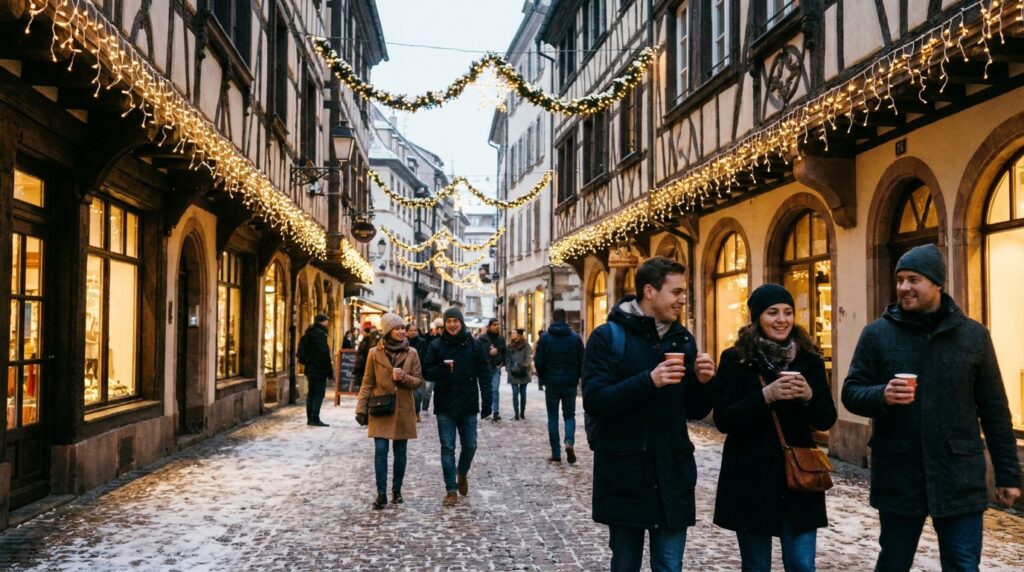
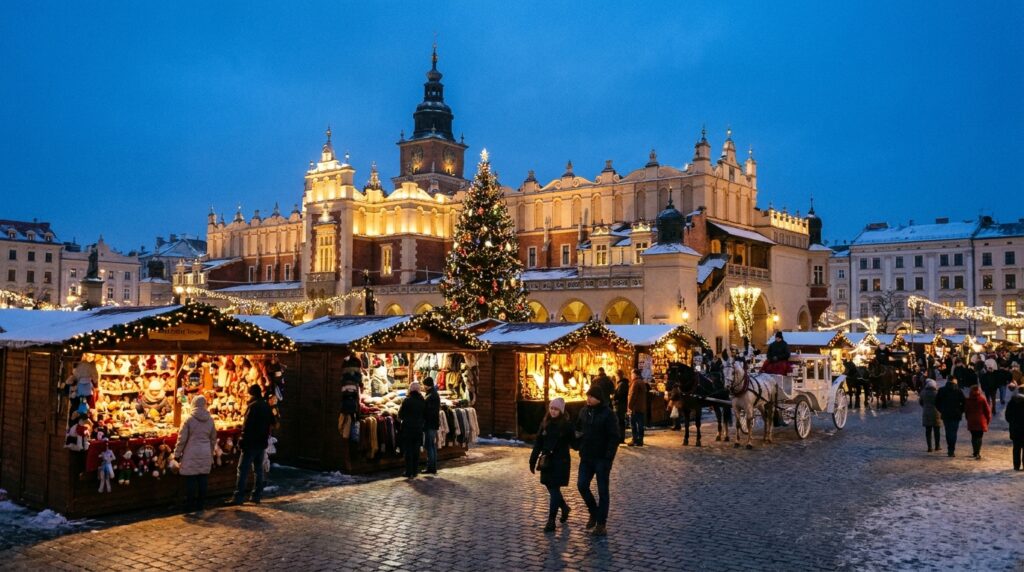
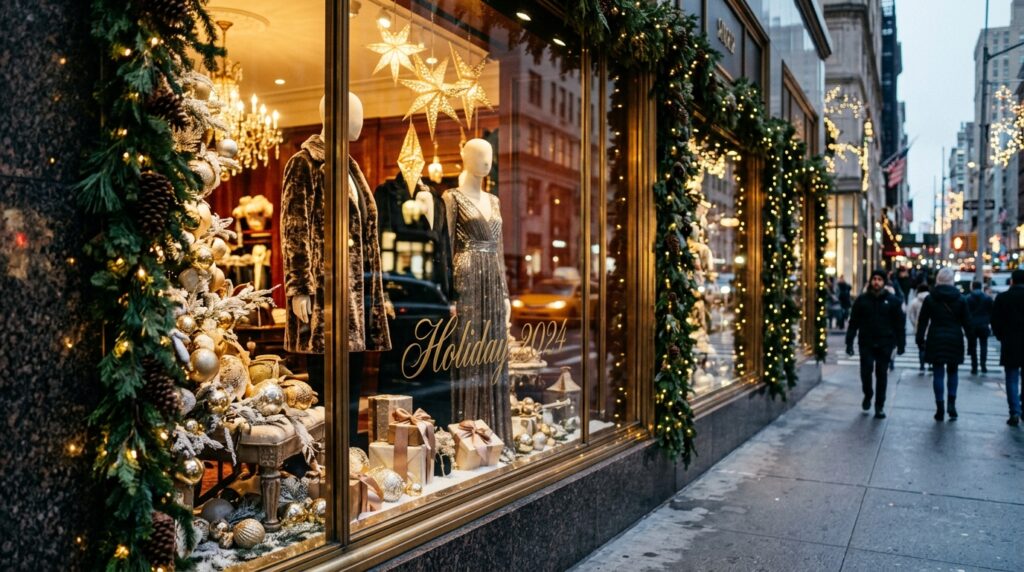
Traveling in December to explore Europe’s winter markets completely transforms the festive season. Leaving routine behind to wander through illuminated wooden chalets filled with the scent of mulled wine, spices, and gingerbread in historic town squares is a truly magical experience. However, when your destination lies outside the eurozone—such as the magnificent Christmas markets in Basel (Switzerland) or Cracow (Poland)—financial preparation becomes a key aspect of your journey that is best sorted before packing your bags.
If you are planning a winter getaway to these northern and central European destinations, organizing your travel budget and currency exchange in advance allows you to enjoy the trip completely stress-free. You can easily order your foreign currency ahead of time through Currency exchange online and have it delivered straight to your home or pick it up at your preferred Eurochange branch.
Planning a festive holiday outside the euro area requires understanding each destination’s unique characteristics. Basel, situated along the Rhine River, hosts one of Switzerland’s largest and most atmospheric Christmas markets across Barfüsserplatz and Münsterplatz, boasting pristine alpine charm and exquisite craft traditions. Meanwhile, Cracow sets up its historic market in the massive Main Market Square (Rynek Główny), surrounded by medieval architecture and featuring its unique, UNESCO-recognized nativity scenes.
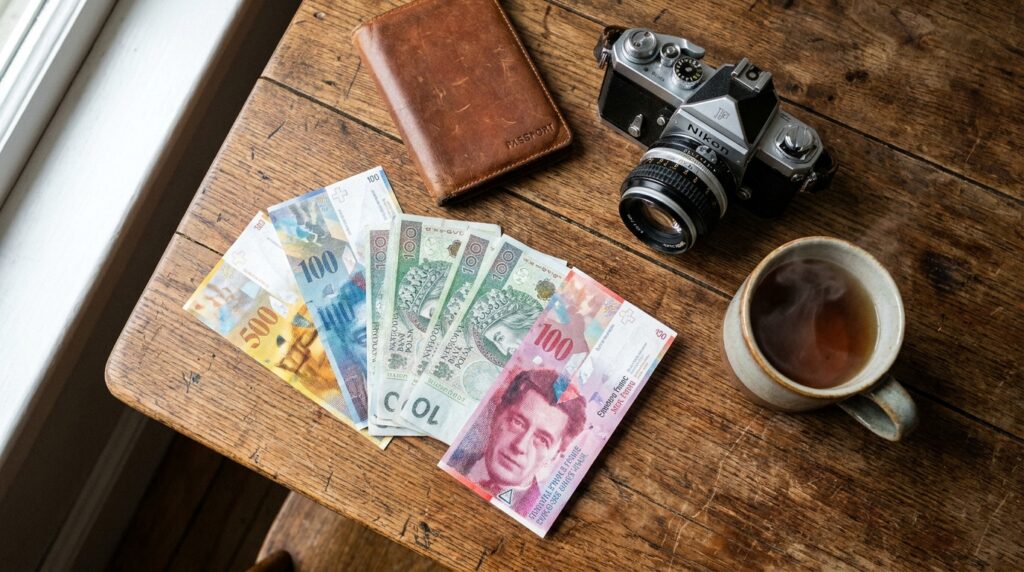
While both destinations share an unparalleled winter charm, their economic contexts differ significantly: Switzerland operates with a high price level and the Swiss franc (CHF), whereas Poland offers a considerably more budget-friendly stay thanks to the Polish zloty (PLN).
One of the most common questions when visiting international Christmas markets is whether you can rely entirely on cards or if carrying cash is mandatory. The current landscape is mixed and varies by country:
In Switzerland (Basel): Card acceptance is widespread, and some market stalls even operate on a cashless basis. Nevertheless, cash remains essential for small everyday purchases, tips, and especially for the traditional ceramic mug deposits (Glühwein cups) returned upon giving back the mug.
In Poland (Cracow): Credit and debit cards are accepted smoothly in hotels, restaurants, and major shops. However, traditional craft stalls, street food vendors, and small artisans at the Main Square Christmas market primarily operate using cash (zlotys).
Additionally, relying solely on standard bank cards abroad can sometimes incur steep foreign transaction fees or unfavorable exchange rates applied by your home bank. Having foreign banknotes ready before departure prevents unexpected surprises and gives you absolute control over your daily budget.
Calculating the exact amount of cash depends on several personal factors: the duration of your trip, accommodation arrangements, dining choices, and planned purchases of holiday crafts. As a general guideline for a weekend getaway or holiday bridge to Basel or Cracow, bringing a base amount of cash dedicated to small purchases at market stalls, local public transit, and tips is ideal, complementing larger expenses with card payments.
Securing your foreign currency beforehand avoids the hassle of searching for improvised exchange booths at airports or train stations upon arrival, where rates are rarely favorable
Monitor the exchange rate: Keep an eye on exchange fluctuations for currencies like the Swiss franc or Polish zloty weeks before your trip to choose the right moment to get your cash.
Keep your money safe: Store the bulk of your cash securely in your hotel or carry-on luggage, keeping only your daily spending money in your wallet.
Mind the deposits: In northern European Christmas markets, paying a small deposit for reusable hot drink mugs is standard practice; always carry small change.
Combine payment methods: Use cards for major bookings and larger bills, keeping cash handy for the authentic, everyday charm of artisan markets.
Necesarias
| Cookie | Dominio | Descripción | Duración |
|---|---|---|---|
| PHPSESSID | eurochange.es | Esta cookie es nativa de las aplicaciones PHP. Se utiliza para almacenar e identificar el ID de sesión único de un usuario con el fin de gestionar su sesión en el sitio web. Es una cookie de sesión y se elimina al cerrar todas las ventanas del navegador. | Sesión |
| LS_CSRF_TOKEN | salesiq.zoho.eu | Cloudflare configura esta cookie para rastrear la actividad de los usuarios en varios sitios web. Caduca al cerrar el navegador. | Sesión |
| LS_CSRF_TOKEN | salesiq.zohopublic.eu | Cloudflare configura esta cookie para rastrear la actividad de los usuarios en varios sitios web. Caduca al cerrar el navegador. | Sesión |
| rc::a | google.com | El servicio recaptcha de Google establece esta cookie para identificar bots y proteger el sitio web contra ataques de spam maliciosos. | Nunca |
| rc::c | google.com | El servicio recaptcha de Google establece esta cookie para identificar bots y proteger el sitio web contra ataques de spam maliciosos. | Sesión |
| zalb_* | crm.zohopublic.eu | Zoho configura esta cookie para equilibrar la carga y garantizar la permanencia de la sesión. Garantiza que las solicitudes de los usuarios se dirijan siempre al mismo servidor durante una sesión, lo que ayuda a mantener la integridad de la sesión y a mejorar el rendimiento del sitio web. | Sesión |
| zalb_* | salesiq.zoho.eu | Zoho configura esta cookie para equilibrar la carga y garantizar la permanencia de la sesión. Garantiza que las solicitudes de los usuarios se dirijan siempre al mismo servidor durante una sesión, lo que ayuda a mantener la integridad de la sesión y a mejorar el rendimiento del sitio web. | Sesión |
| zalb_* | salesiq.zohopublic.eu | Zoho configura esta cookie para equilibrar la carga y garantizar la permanencia de la sesión. Garantiza que las solicitudes de los usuarios se dirijan siempre al mismo servidor durante una sesión, lo que ayuda a mantener la integridad de la sesión y a mejorar el rendimiento del sitio web. | Sesión |
Preferencias
| Cookie | Dominio | Descripción | Duración |
|---|---|---|---|
| uesign | salesiq.zohopublic.eu | Zoho establece esta cookie para el chat en vivo de visitantes. | 1 mes |
Estadística
| Cookie | Dominio | Descripción | Duración |
|---|---|---|---|
| drscc | eu1-files.zohopublic.eu | Sesión | |
| eurochange-_zldp | .eurochange.es | 1 año 1 mes 4 días | |
| eurochange-_zldt | .eurochange.es | 1 día |
Marketing
| Cookie | Dominio | Descripción | Duración |
|---|---|---|---|
| siqlsdb | eurochange.es | Zoho utiliza esta cookie para generar un identificador único para la sesión. Esto permite que el sitio web obtenga datos sobre el comportamiento de los visitantes con fines estadísticos. | Nunca |
| utsdb | eurochange.es | Zoho SalesIQ establece esta cookie para registrar datos sobre el comportamiento del visitante en el sitio web. | Nunca |

