


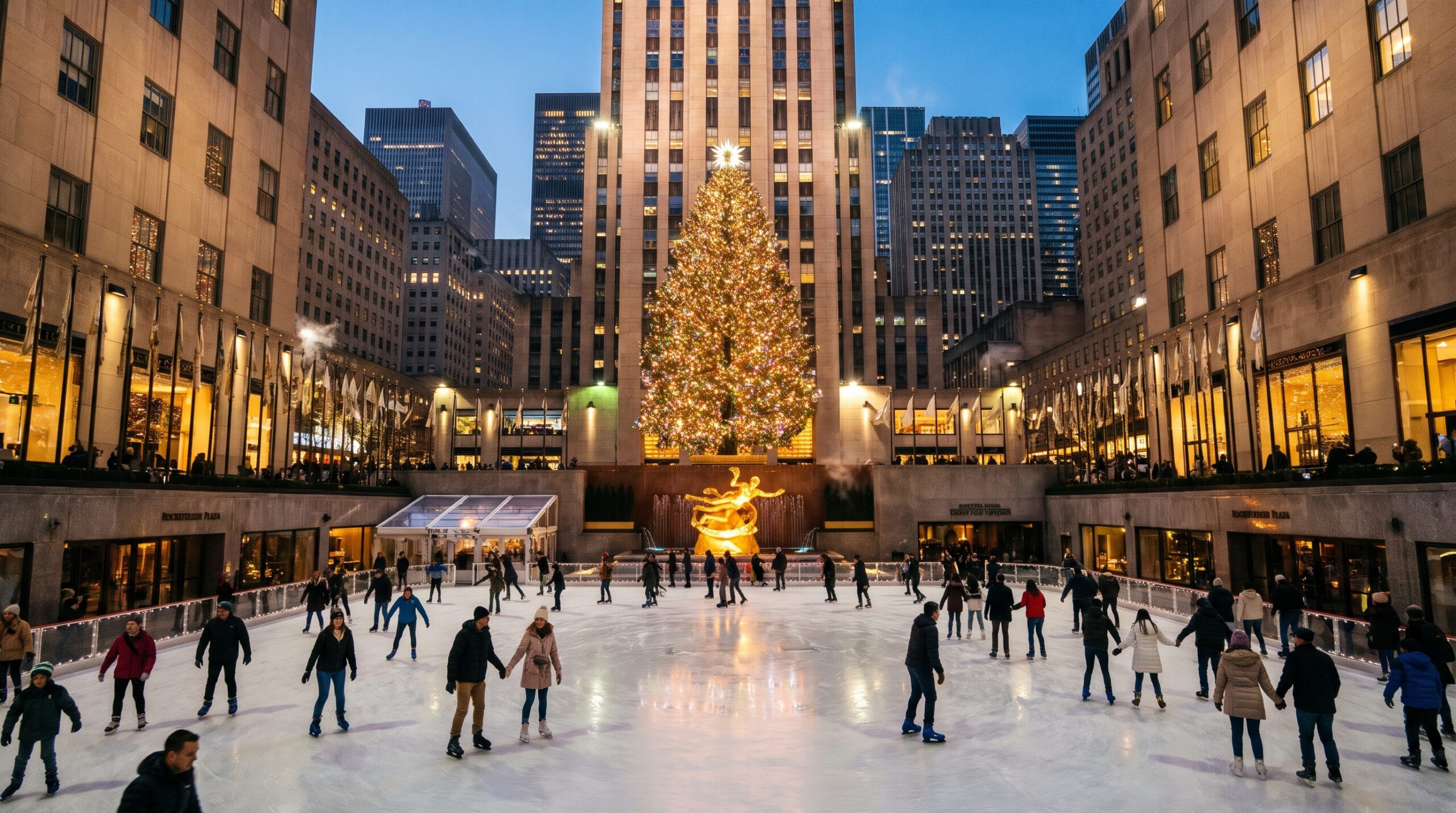
Spending December in the United States is a bucket-list trip for thousands of travellers from Spain and across Europe. While New York City draws the largest share of winter flights, the country offers several other cities where Christmas traditions run deep—from Chicago’s German-style markets to Boston’s brick-lined streets and mountain towns buried in snow. Across all of them, the official currency is the US dollar (USD). Sorting out your travel money before departure helps you avoid unnecessary friction in a country where tipping, sales tax added at the register, and exchange rates can quickly affect your daily budget.
Organising your currency exchange before you fly means landing with cash already in your pocket for your first transfer or coffee. Through Eurochange’s online currency service, you can buy US dollars in advance for home delivery or collection at over 40 branches across Spain—and if you plan ahead, it is worth checking their weekly Wednesday USD offer.
New York City: The Heart of the American Christmas
New York sets the tone for the US holiday season from late November through early January. December temperatures typically range between 0°C and 7°C, so the smartest way to pace your days is to mix outdoor walks with indoor stops. Snow is possible, though far from guaranteed in December.
Beyond the famous Rockefeller Center tree, several areas anchor the city’s festive calendar:
Bryant Park Winter Village and Union Square: bustling holiday markets ideal for picking up local crafts, hot chocolate, or skating on the rink.
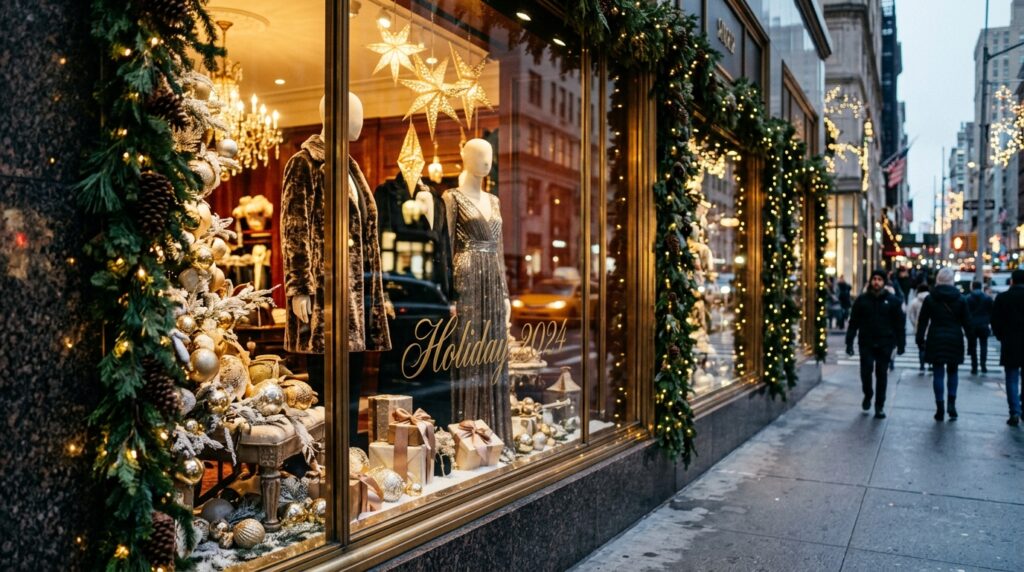
Fifth Avenue window displays: department stores such as Saks Fifth Avenue and Macy’s at Herald Square draw crowds day and night with elaborate seasonal installations.
Dyker Heights (Brooklyn): a residential neighbourhood famous for its over-the-top house decorations. Plan your afternoon ahead if you are heading there by subway or guided tour.
Keep in mind that on December 24, 25, and 31, many restaurants and attractions operate on reduced hours or require advance bookings. From December 26 onwards, post-Christmas sales begin across the city and nearby outlets.
Other Iconic US Cities for Christmas
If you have already visited New York or want to build a multi-city winter itinerary, these destinations offer a very different side of the American holidays.
Chicago, Illinois
Chicago hosts one of the most authentic European-style holiday markets in the country: the Christkindlmarket at Daley Plaza, modelled after Nuremberg’s historic market. The Magnificent Mile glows with lights, and skating at Millennium Park offers a classic skyline backdrop. Wind off Lake Michigan makes temperatures feel significantly colder than in New York, so pack accordingly.
Boston, Massachusetts
Boston delivers a quieter, classic New England Christmas. Walking through the gas-lit, cobblestone streets of Beacon Hill or the North End at dusk feels worlds away from the rush of Midtown Manhattan. The Boston Pops Holiday Concert is a seasonal staple for both locals and visitors.
Bethlehem, Pennsylvania
Less than two hours by car from New York City, Bethlehem has earned its nickname as Christmas City. Founded in the 18th century, its Moravian heritage shows up in illuminated star decorations, local craft markets, and historic walking tours. It works well as a day trip or overnight stop for families renting a car on the East Coast.
Leavenworth, Washington
Tucked into the Cascade Mountains in the Pacific Northwest, this Bavarian-style village transforms into a snowy winter postcard every December. Wooden buildings wrapped in thousands of lights, carollers, and warm street food make it a favourite for travellers chasing a white Christmas on the West Coast.

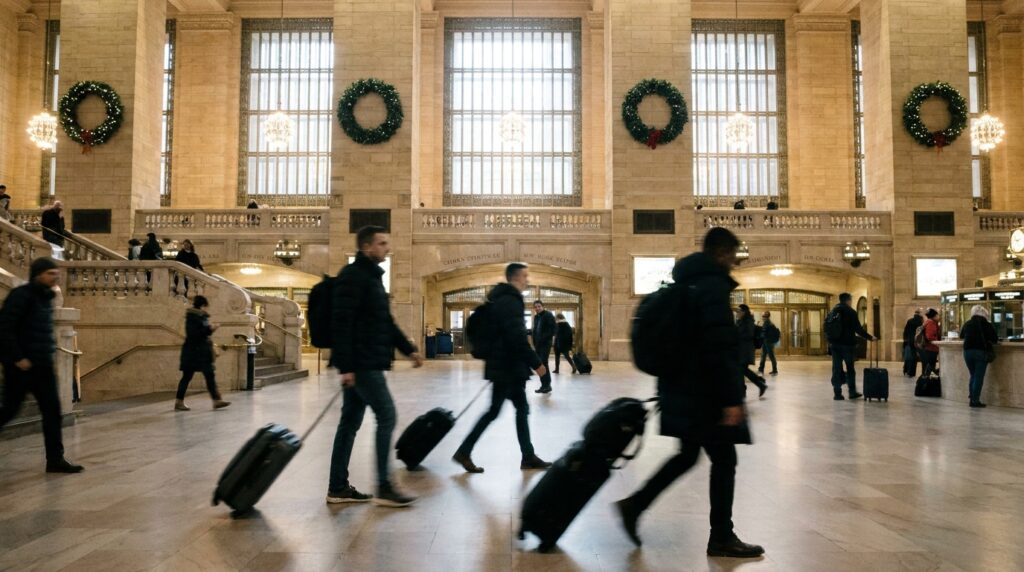
Money and Payments in the US: What Travellers Should Know
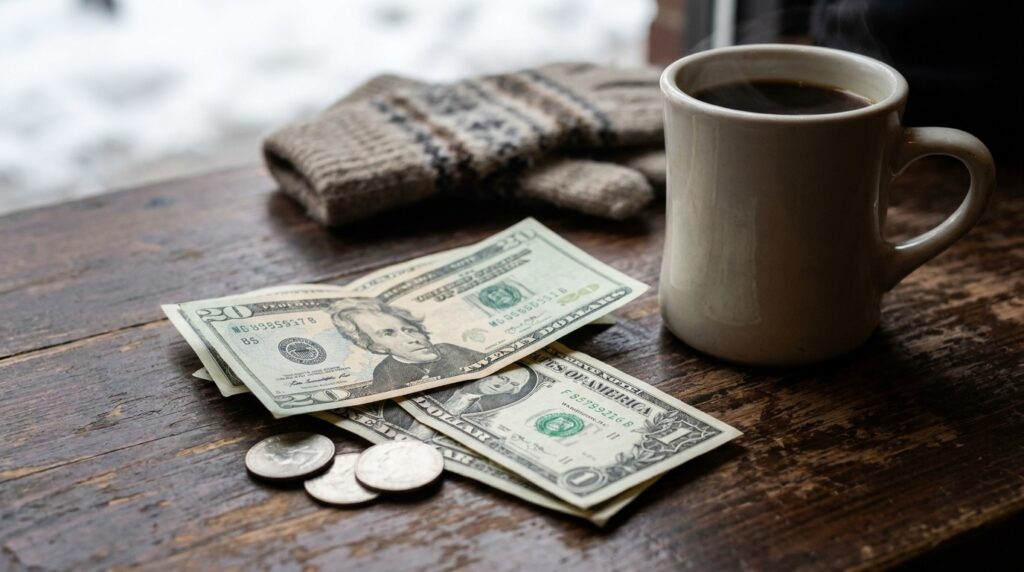
The official currency throughout the United States is the US dollar (ISO code: USD). Common banknotes come in denominations of $1, $5, $10, $20, $50, and $100, alongside coins of 1¢ (penny), 5¢ (nickel), 10¢ (dime), and 25¢ (quarter).
Card acceptance is widespread across hotels, major retailers, museums, and sit-down restaurants. However, foreign transaction fees and ATM withdrawal charges depend entirely on your bank and card terms, so it is worth checking them before you travel.
Even in a card-friendly country, carrying US dollar cash remains genuinely useful:
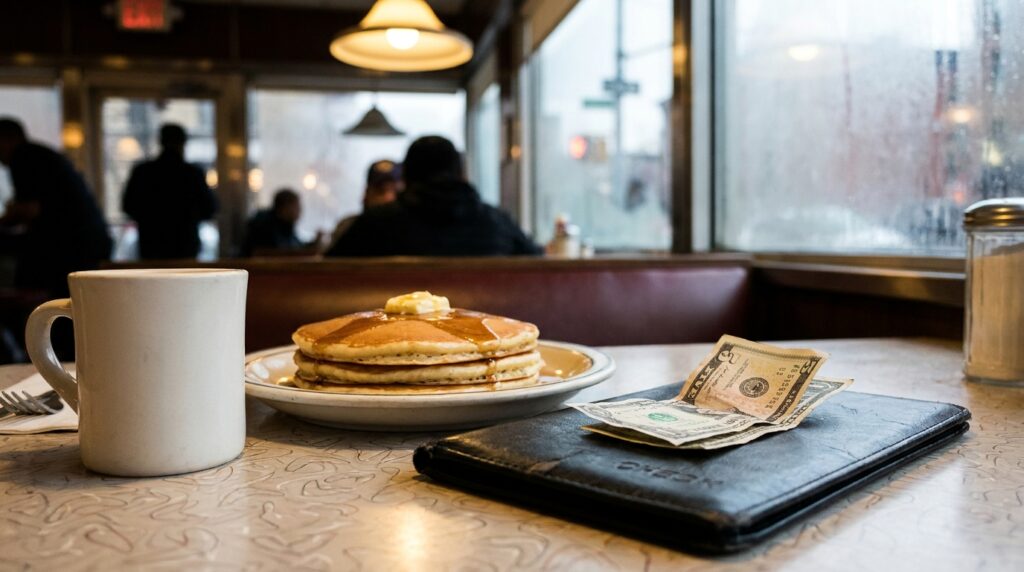
Tipping: tipping is deeply ingrained in US service culture. Restaurant servers typically expect 15% to 20% (or more), and it is customary to tip hotel bellhops, housekeeping staff, taxi drivers, and walking-tour guides in cash. Having $1 and $5 bills on hand makes this effortless.
Holiday markets and food carts: at places like Bryant Park or Manhattan street stalls, paying cash for a hot drink or snack speeds things up.
Independent shops: some smaller cafés, bakeries, or laundromats set minimum card amounts or prefer cash.
Sales tax at checkout: displayed prices in shops and menus usually exclude state and local sales tax, which is added when you pay.
| Destination | Currency | ISO Code | Cash Usage | Practical Tip |
|---|---|---|---|---|
| New York City | US Dollar | USD | Moderate (tipping, markets, street carts) | Carry $1 and $5 bills for tips and Bryant Park stalls. |
| Chicago | US Dollar | USD | Moderate (Christkindlmarket and tipping) | Cash speeds up queues at outdoor holiday market stalls. |
| Boston | US Dollar | USD | Low–Moderate (local cafés and tips) | Mix card payments with cash in historic areas like North End. |
| Bethlehem / Leavenworth | US Dollar | USD | Moderate (local crafts and small shops) | Order USD online ahead of time and check the Wednesday offer. |
How Much Cash Should You Take to the US?
There is no single amount that fits every itinerary. How many US dollars you should carry depends on:
Trip length and group size: a five-day couple’s trip to New York requires a different cash buffer than a ten-day family road trip.
Pre-paid expenses: flights, hotels, observation decks, and Broadway tickets are usually paid before departure.
Your card-to-cash ratio: if you plan to put hotels and main meals on a card, cash will mainly cover tips, transit top-ups, market stalls, and small purchases.
As a rough, non-binding guideline, many travellers carry around $40 to $60 per person per day in cash when combining it with a card, adjusting upwards if travelling with children or preferring to budget daily spending in cash.
One legal rule to remember: there is no maximum limit on how much cash you can bring into the United States, but US Customs and Border Protection (CBP) requires you to declare any amount over $10,000 (in cash or monetary instruments). For families or groups travelling together, this threshold applies to the combined total.
Exchanging Euros to Dollars Before You Fly
Waiting until you land at a US airport to exchange money often eats into your first day and leaves you with limited choices. Arranging your money exchange in Spain beforehand lets you:
Know your exact exchange rate upfront and keep your holiday budget under control.
Arrive with smaller denominations ready for tips, taxis, or snacks right after a long-haul flight.
Skip queues at local exchange desks during peak December travel weeks.
With Eurochange, you can order US dollars online and choose insured home delivery or pick-up at more than 40 offices across Spain. If your dates are flexible, keep an eye on their Wednesday USD offer when placing your online order.

Practical Tips for Managing Your Christmas Budget in the US
Order Your Dollars Early
December is peak season for both flights and courier deliveries. Ordering your currency one to two weeks ahead gives you time to choose a convenient delivery slot and take advantage of weekly promotions like Wednesday USD offers.
Split Your Cash and Cards
Avoid keeping all your money in one wallet. Leave part of your cash in the hotel safe and carry a backup card in a separate pocket in case your primary card triggers a fraud alert abroad.
Mix Your Banknotes
Aim for a practical mix of $20 bills for everyday spending and plenty of $1 and $5 bills for tips. Large notes like $50 and $100 can be harder to break at street stalls or taxis.
Check Entry Requirements
Make sure your ESTA travel authorisation (if eligible under the Visa Waiver Program) and passport validity are sorted well before departure, and keep digital copies of hotel bookings and travel insurance handy.
Frequently Asked Questions About Christmas Travel to the US
What currency is used in New York and the United States?
The official currency across the entire United States is the US dollar (USD). It is the standard currency accepted for all local purchases, transport, and services.
Can you pay with euros in the United States?
No. Shops, restaurants, and transport providers in the US do not accept euros. You will need US dollars in cash or a payment card.
Is it better to use cash or card in New York at Christmas?
A combination of both works best. Cards are convenient for hotels, restaurants, and department stores, while US dollar cash is very practical for tipping, holiday markets, and street vendors.
How much cash should I bring to the US?
It depends on your trip length and how much you pay by card. As a general guide, $40 to $60 per person per day is a comfortable range for tips and minor expenses if you use a card for major purchases.
Is there a cash limit when entering the United States?
There is no cap on how much cash you can bring, but you must declare amounts exceeding $10,000 (or equivalent in other currencies) to US Customs (CBP). This limit is calculated jointly for families travelling together.
Where can I buy US dollars online in Spain before travelling?
You can buy US dollars online with Eurochange for insured home delivery or collection at over 40 branches in Spain, with a dedicated Wednesday offer available for USD.
Sort Your Dollars Early and Enjoy the Season
Whether you are strolling past Fifth Avenue’s holiday windows or combining several classic US winter cities, taking care of your currency exchange before departure removes one major headache during peak travel season. With US dollars ready in your wallet and a balanced mix of cash and cards, you can focus on enjoying the trip.

